
Payroll Remittance Deadlines: What New Employers Actually Need to Know
Priya's corporation just became a remitter for the first time. Real 2026 numbers on remitter types, due dates, and the penalty rule most guides get wrong.
The moment Priya's corporation started paying her a T4 salary, it became something new: a remitter. Every dollar of CPP and income tax withheld from that $70,000 salary now has to reach the CRA on a schedule, and missing that schedule costs real money fast, sometimes before a business even realizes it was on the clock.
Most guides to payroll remittance either list the due dates without explaining how a business ends up on one schedule versus another, or bury the penalty rules in language vague enough to be actively misleading. This guide covers both properly: how remitter type actually gets assigned, especially in a business's first year with no history to go on, what late remittances actually cost, and the one penalty rule almost every other guide gets wrong.
The Short Answer: Four Remitter Types, Four Schedules
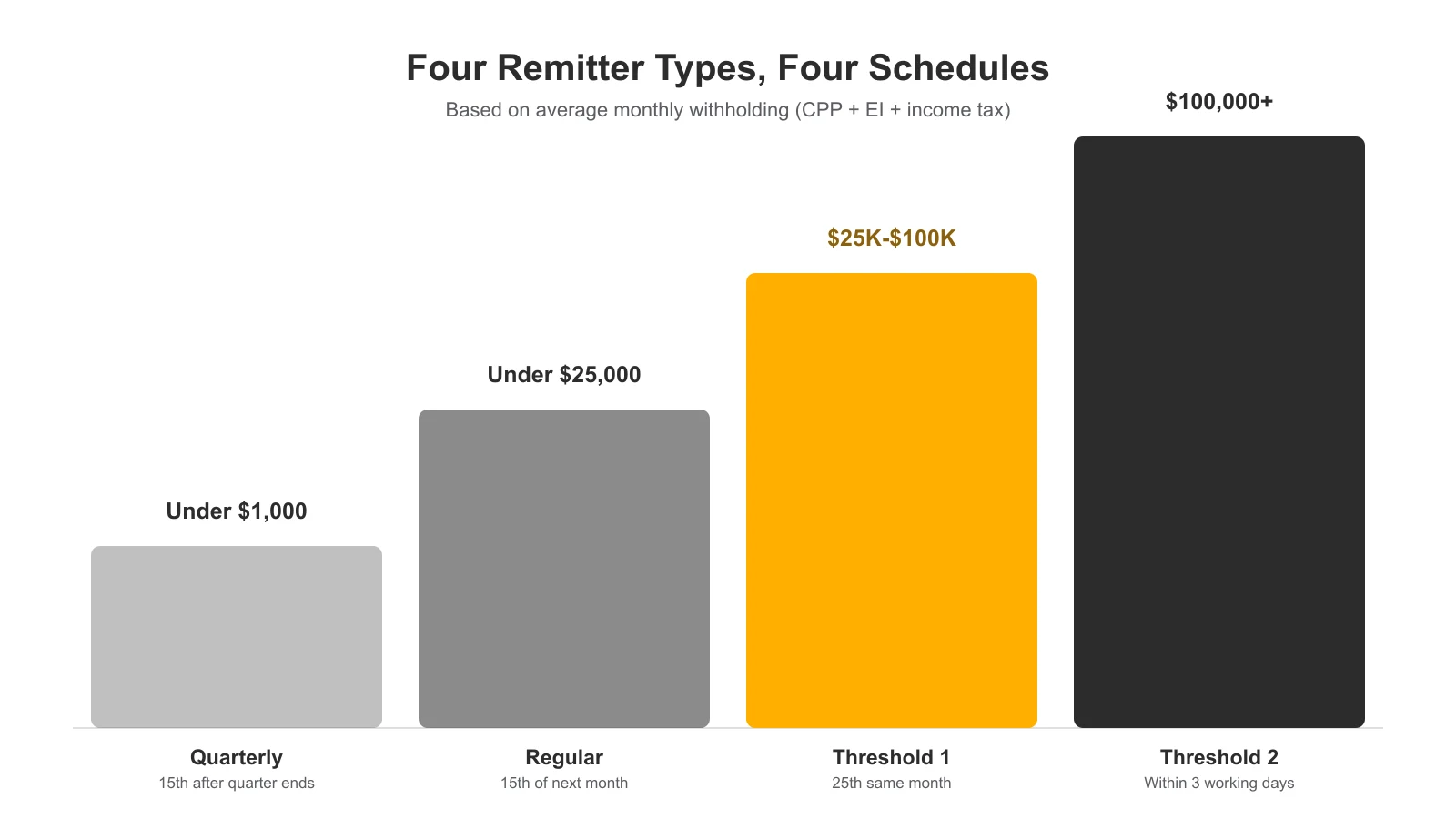
How often a business remits depends on its average monthly withholding amount (AMWA), the total CPP, EI, and income tax withheld from all employees, averaged across the months that required a remittance. CRA assigns a remitter type based on that figure and notifies the business through Form PD7A. Here's how the four types break down.
Quarterly (new small employer)
Average Monthly WithholdingUnder $1,000, account under 12 monthsDue Date15th of the month after the quarter endsRegular
Average Monthly WithholdingUnder $25,000Due Date15th of the following monthAccelerated, Threshold 1
Average Monthly Withholding$25,000 to $99,999.99Due Date25th of the same month (1st-15th); 10th of next month (16th-end)Accelerated, Threshold 2
Average Monthly Withholding$100,000+Due DateWithin 3 working days of each week-long period
| Remitter Type | Average Monthly Withholding | Due Date |
|---|---|---|
| Quarterly (new small employer) | Under $1,000, account under 12 months | 15th of the month after the quarter ends |
| Regular | Under $25,000 | 15th of the following month |
| Accelerated, Threshold 1 | $25,000 to $99,999.99 | 25th of the same month (1st-15th); 10th of next month (16th-end) |
| Accelerated, Threshold 2 | $100,000+ | Within 3 working days of each week-long period |
If a due date lands on a Saturday, Sunday, or a public holiday CRA recognizes, the remittance is still on time if it arrives the next business day. Almost every new employer starts in one of the first two rows, and which one depends entirely on the mechanics in the next section.
Your First Year: No History, One Real Test
A business remitting for the very first time has no prior-year AMWA for CRA to measure, so a specific rule fills that gap. A new employer qualifies automatically for quarterly remitting if their monthly withholding amount is under $1,000 and they maintain a perfect compliance record, every CPP, EI, and income tax remittance, plus GST/HST and T4 filings, on time for a full 12 months. There's no application. CRA reviews this automatically and confirms the assignment through Form PD7A.
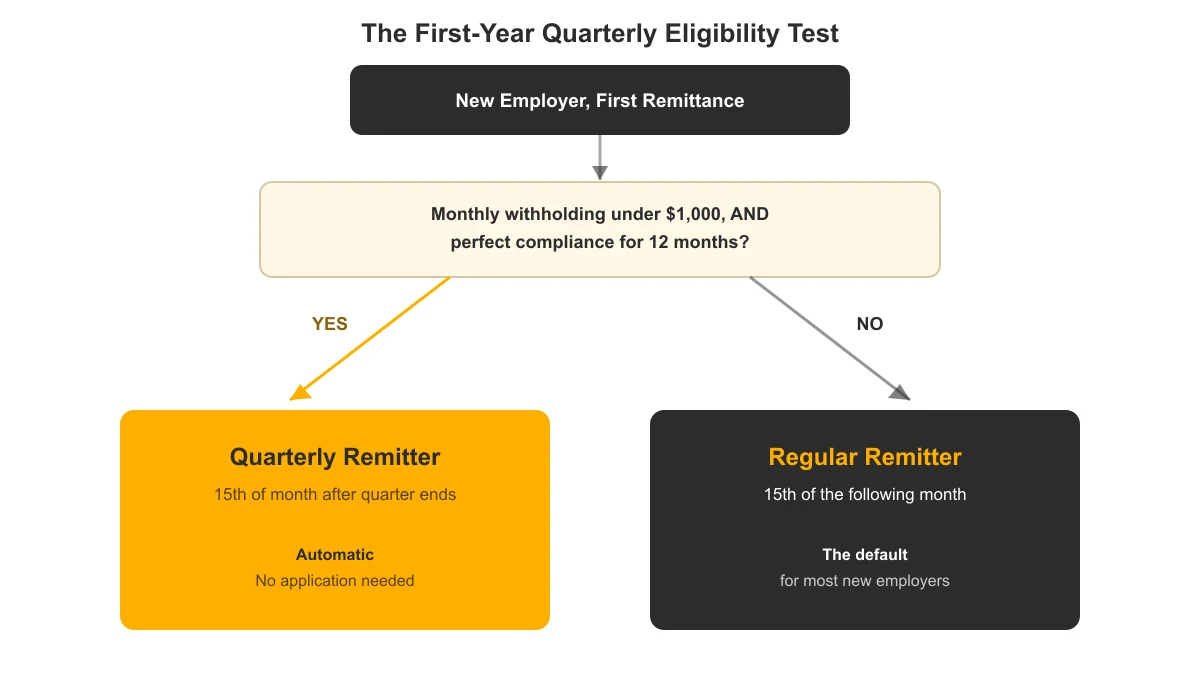
Miss that $1,000 threshold or the perfect-compliance condition and the default is Regular remitter status, monthly, due the 15th of the following month, not an automatic jump to an accelerated tier, since those require actual withholding volume a brand-new payroll simply doesn't have yet. In practice, that $1,000 threshold is easier to cross than it sounds. It covers CPP, EI, and income tax combined, and once a decent salary is added on top of the employer's own matching CPP contribution, a single well-paid employee can push a brand-new payroll past it within the first month or two, landing the business on the monthly Regular schedule by default rather than the quieter quarterly one.
How Remitter Type Gets Reassessed
Once a business has a full year of remittance history, CRA recalculates AMWA using that history and reassigns remitter type going forward, notifying the business through an updated PD7A rather than requiring anything from the employer directly. A growing payroll can move up a tier, from Regular to Threshold 1, for instance, the same way a business that scales back can eventually move down. Exactly how many months of history CRA weighs in that recalculation isn't laid out in a single clean public figure, so treat the type on your current PD7A as the authoritative answer rather than trying to predict a change yourself from AMWA math alone.
The practical takeaway is that remitter type isn't a one-time classification to figure out and forget. A business that hires its second and third employee, or gives a first employee a substantial raise, can cross into a faster remittance schedule without anyone deciding to change anything, simply because the withholding volume grew. Checking the current PD7A whenever payroll headcount or pay changes meaningfully, rather than assuming last year's schedule still applies, is the difference between catching a tier change on the current PD7A and finding out about it after a payment lands late on the old schedule.
What Late Remittances Actually Cost
Penalties scale with how late the remittance is, not a flat rate, and they generally apply only to the portion of the shortfall over $500, amounts under that are penalized only if the failure was knowing or grossly negligent.
1 to 3 days
Penalty3%4 to 5 days
Penalty5%6 to 7 days
Penalty7%More than 7 days, or never remitted
Penalty10%
| Days Late | Penalty |
|---|---|
| 1 to 3 days | 3% |
| 4 to 5 days | 5% |
| 6 to 7 days | 7% |
| More than 7 days, or never remitted | 10% |
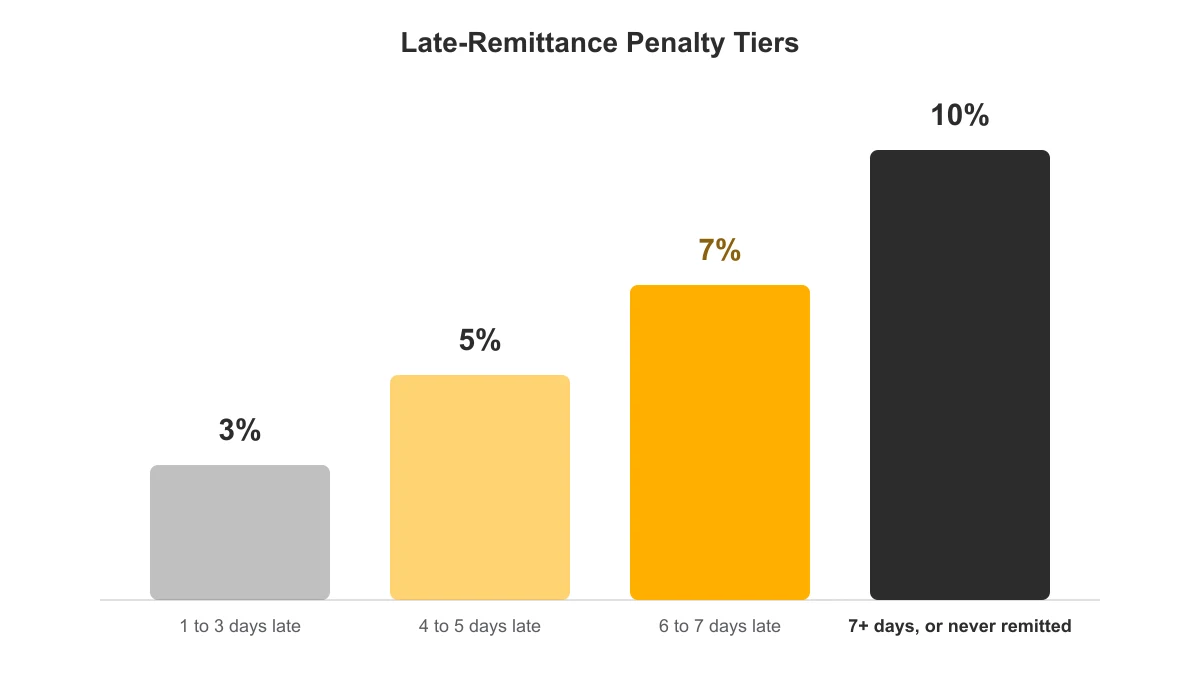
Here's the correction almost every other guide skips: the 20 percent penalty commonly mentioned alongside these tiers is not an automatic doubling the second time a business is late in a year. It applies only when the failure is the second or later penalty assessed within the calendar year and CRA determines the failure was knowing or grossly negligent, a real finding CRA has to make, not a mechanical result of a repeat date slip. A second genuinely accidental late remittance in the same year doesn't automatically jump to 20 percent just because it's the second one.
Interest on Top of the Penalty
Interest accrues separately from the penalty, compounding daily from the day the remittance was due, at a prescribed rate CRA resets every quarter. For July through September 2026, that rate is 7 percent. A $5,000 remittance paid 10 days late, comfortably into the 10 percent penalty tier, would owe roughly $500 in penalty plus about $9.60 in interest at the current rate, a small figure next to the penalty itself, but one that keeps compounding for as long as the amount stays unpaid.
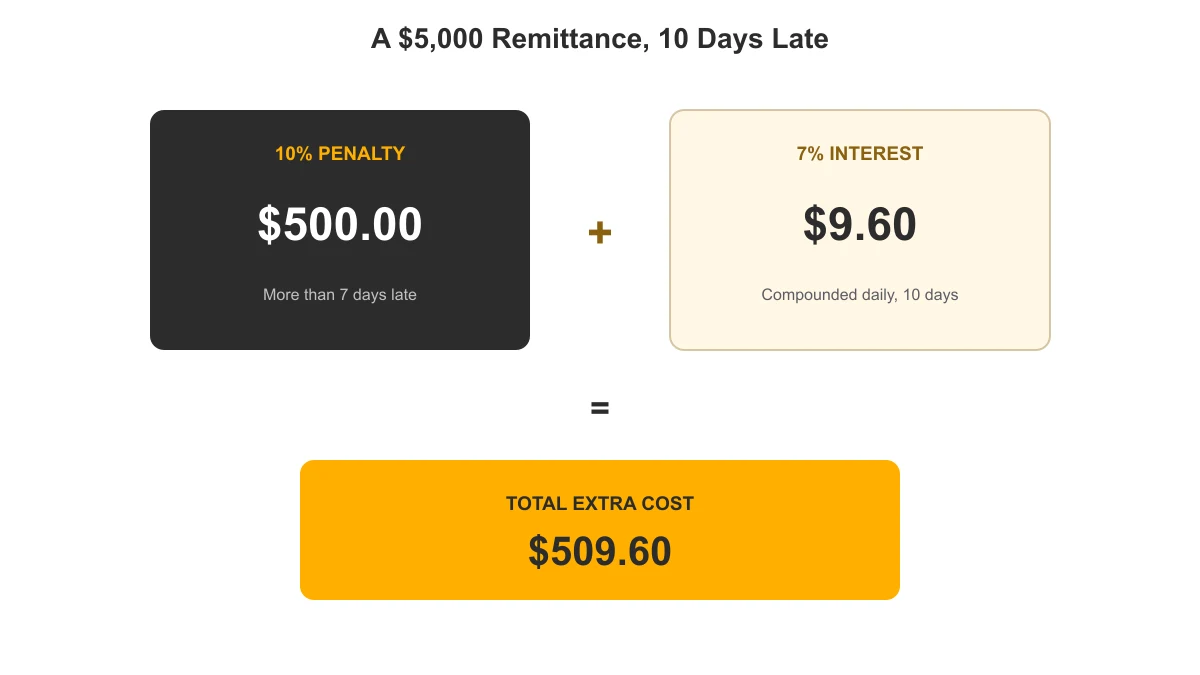
Because the rate resets quarterly, treat 7 percent as a snapshot rather than a fixed number, and check CRA's current prescribed interest rate before relying on it for anything beyond a rough estimate.
One thing worth knowing before assuming a penalty is final: CRA's taxpayer relief provisions allow penalties and interest to be cancelled or waived in specific circumstances, a natural disaster, serious illness, or a CRA processing error, requested through Form RC4288. It isn't automatic, doesn't apply to ordinary oversight or cash-flow problems, and CRA decides case by case, but it's a real option worth knowing about if a genuine, documentable circumstance caused the delay, rather than assuming a late remittance is simply a sunk cost.
Remitting the Right Way, Not Just on Time
Being on time isn't automatically enough. Threshold 2 accelerated remitters are required to pay electronically or in person at a Canadian financial institution; mailed payments aren't accepted for that tier at all. Every other remitter type, quarterly, Regular, and Threshold 1, can still pay by mail, in person, or electronically. Paying through the wrong channel for your remitter type, even if the payment technically arrives on time, can trigger its own penalty, commonly cited at 3 percent, separate from the late-remittance tiers above.
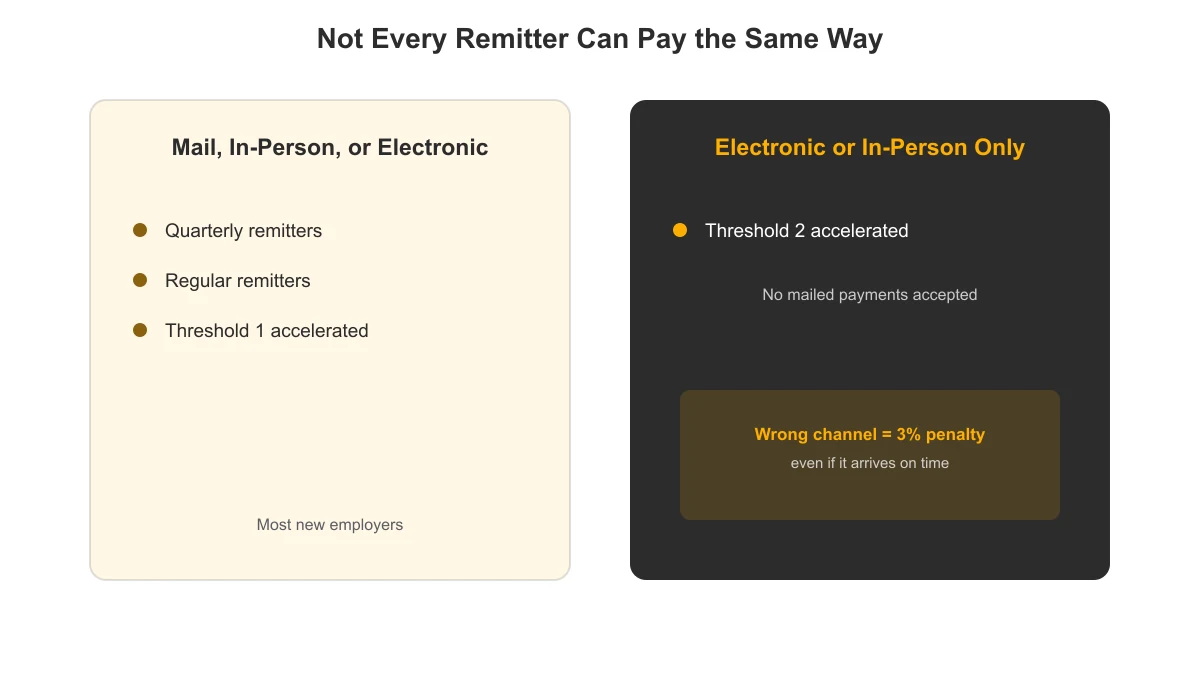
Financial institution payments also need an original CRA remittance voucher; photocopies and faxes are rejected at the counter, which has derailed more than one business owner trying to remit on the actual due date with what turned out to be the wrong piece of paper.
PDOC, My Business Account, and PD7A: What Each One Actually Does
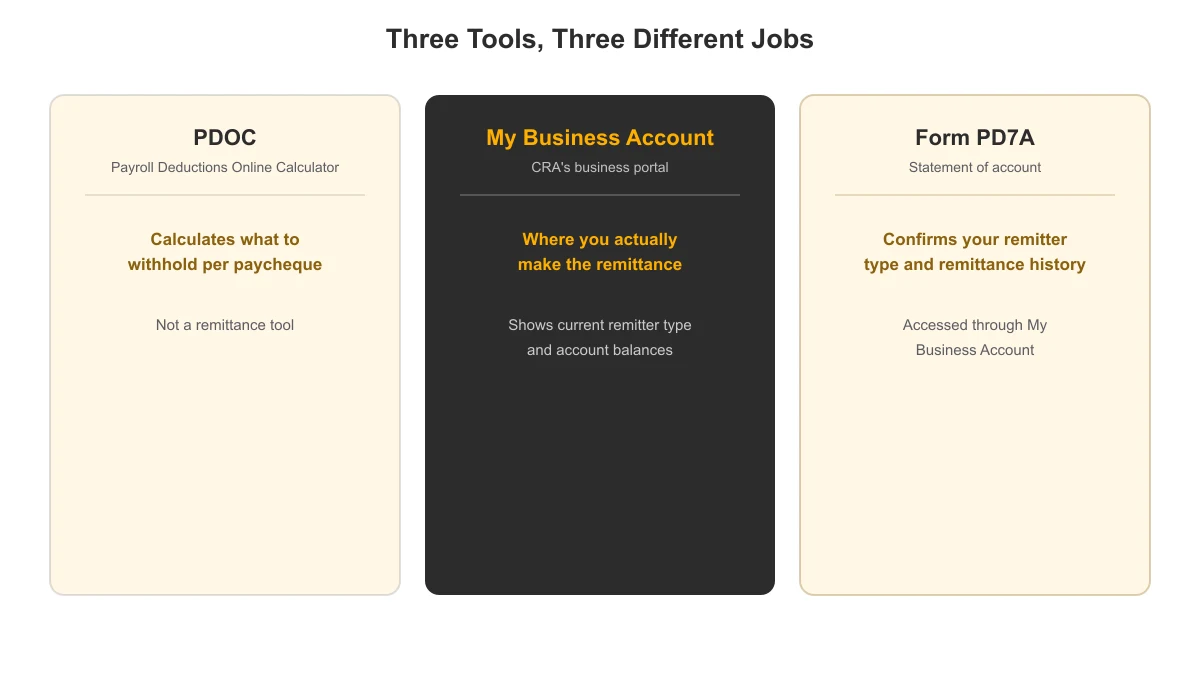
These three get conflated constantly, and they do genuinely different jobs. The Payroll Deductions Online Calculator, PDOC, calculates the CPP, EI, and income tax to withhold from a given paycheque; it's a calculation tool, not a remittance system. My Business Account is CRA's portal for actually making remittances, viewing account balances, and checking current remitter type. Form PD7A is CRA's remittance voucher and statement of account, the document that confirms remitter type and shows what's been remitted, accessible through My Business Account rather than something to wait for in the mail.
The penalty tiers reward exactly what they sound like they'd reward: being a little late costs a little, being very late costs a lot. Nobody gets caught off guard by the rate itself, only by not knowing which remitter type they were on in the first place.
Getting Remittances Off Your Plate
A brand-new payroll is exactly when remitter-type confusion costs the most, since there's no track record yet to fall back on if something slips. Our payroll service sets up remittances correctly from the first pay run, tracks the actual due dates for your specific remitter type, and flags a type change before it catches you off guard.
Book a free call and we'll get your payroll remittances set up right from the start.
On this page
Never miss a deadline again
We track every filing date for our clients. Let us watch yours.
Book a free callAccounting Firm Mississauga Team
A practice of expert accountants filing returns for Mississauga businesses and individuals for close to a decade. We write these to answer the questions clients actually ask.
Frequently Asked Questions
How often do I have to remit payroll deductions to the CRA?
It depends on your remitter type, based on average monthly withholding. Most new employers start as either quarterly (under $1,000 a month, with a perfect compliance record) or Regular (under $25,000 a month, due the 15th of the following month). Higher-withholding businesses remit more frequently under the Threshold 1 or Threshold 2 accelerated schedules.
What happens if I remit payroll deductions late?
A graduated penalty applies based on how many days late: 3% for 1 to 3 days, 5% for 4 to 5 days, 7% for 6 to 7 days, and 10% for more than 7 days or if never remitted. These generally apply only to the portion of the shortfall over $500. Interest also accrues separately, compounding daily from the due date at CRA's current prescribed rate.
Does the penalty double to 20% if I'm late a second time?
Not automatically. The 20% penalty only applies when it's the second or later penalty assessed within the same calendar year and CRA determines the failure was knowing or grossly negligent, a specific finding, not a mechanical result of simply being late twice.
How is my payroll remitter type determined as a new employer?
A new employer with no remittance history qualifies for quarterly remitting automatically if their monthly withholding is under $1,000 and they maintain a perfect compliance record for 12 months. There's no application; CRA assesses this automatically and confirms it through Form PD7A. Otherwise, the default is Regular remitter status, remitting monthly.
Can I remit my payroll deductions by mail?
Most remitter types can, quarterly, Regular, and Threshold 1 accelerated all accept mailed payments. Threshold 2 accelerated remitters, generally the highest-withholding businesses, must pay electronically or in person at a financial institution; mail isn't accepted for that tier.
Can a payroll remittance penalty be waived?
Sometimes, through CRA's taxpayer relief provisions, requested using Form RC4288, but it isn't automatic and doesn't cover ordinary oversight or cash-flow issues. Relief is generally reserved for specific, documentable circumstances like a natural disaster, serious illness, or a CRA processing error, decided case by case.
Recent posts
View all →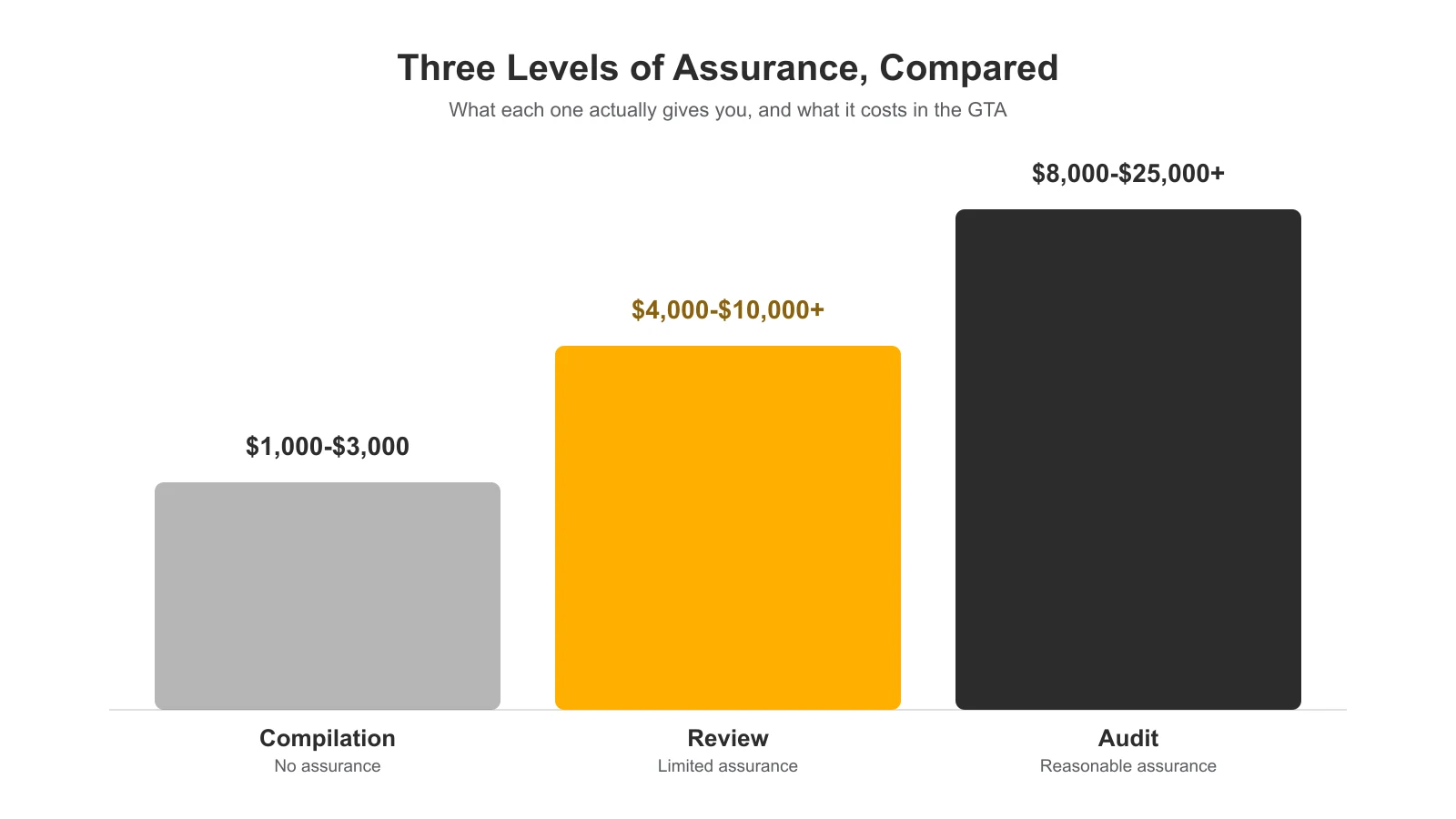 Audit & Assurance
Audit vs. Review vs. Compilation: What Your Business Actually Needs
A bank, franchisor, or investor just asked for "reviewed" or "audited" statements. Here's what each assurance level actually means, what it costs in the GTA, and how to know which one applies to you.
 Corporate Tax
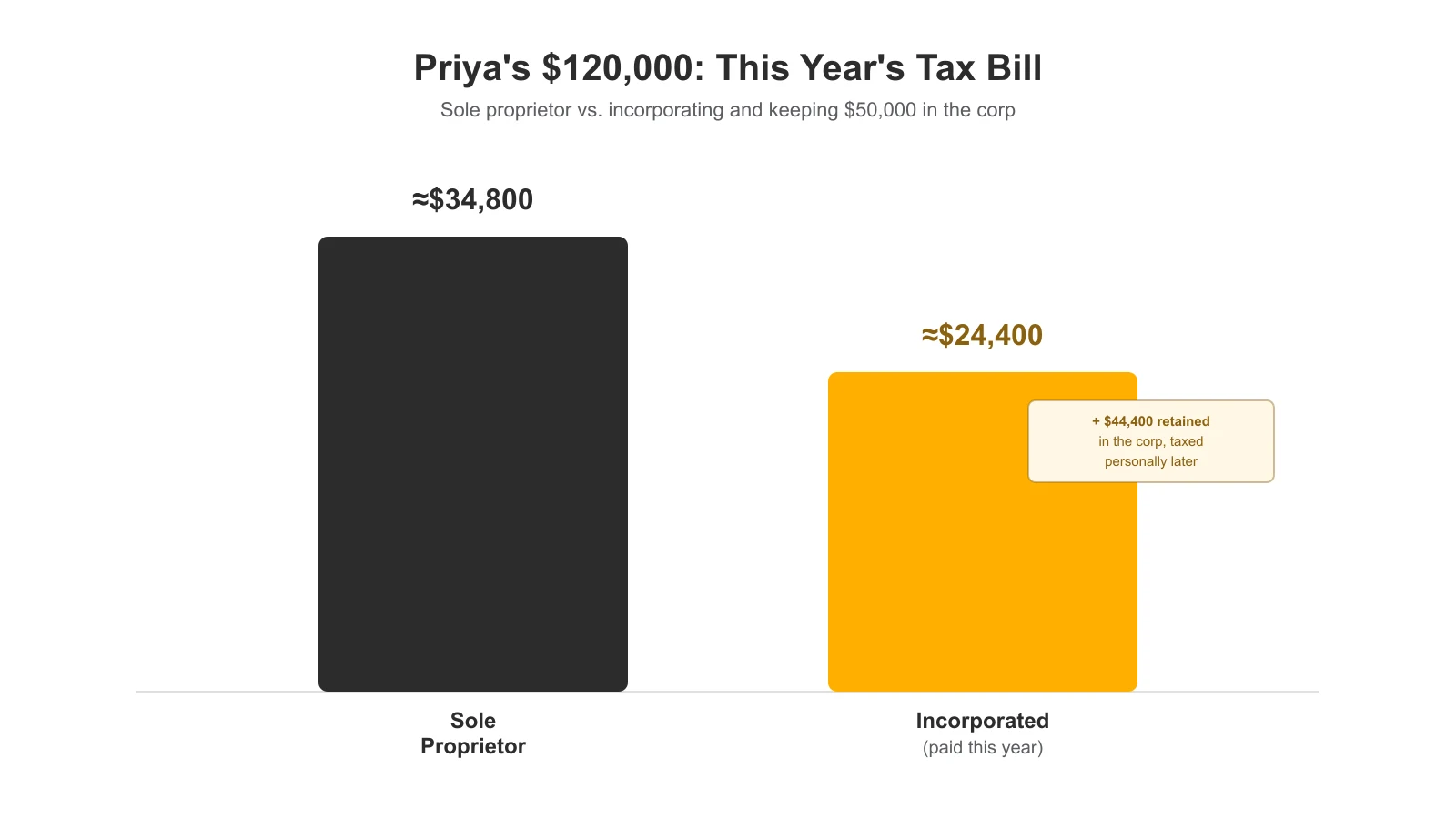
Should You Incorporate? What It Actually Changes About Your Taxes
Incorporating doesn't erase your tax bill, it defers it. A real worked example, using 2026's new small business rate, of what actually changes when you stop being a sole proprietor.
 Personal Tax
Self-Employed Tax Filing in Canada: What You Actually Owe, With Real Numbers
A Mississauga freelancer's $65,000 in revenue, walked through real 2026 numbers: T2125 deductions, CPP contributions, and the two tax deadlines almost everyone confuses.
Free Consultation
Tell Us What You Need. Get a Real Answer Back.
No sales script, no obligation. Describe your situation once and an accounting specialist will follow up with a straight answer and a flat quote.
- Flat-fee quote before any work starts
- Response within one business day
- Reviewed by an expert accountant, not just a bookkeeper